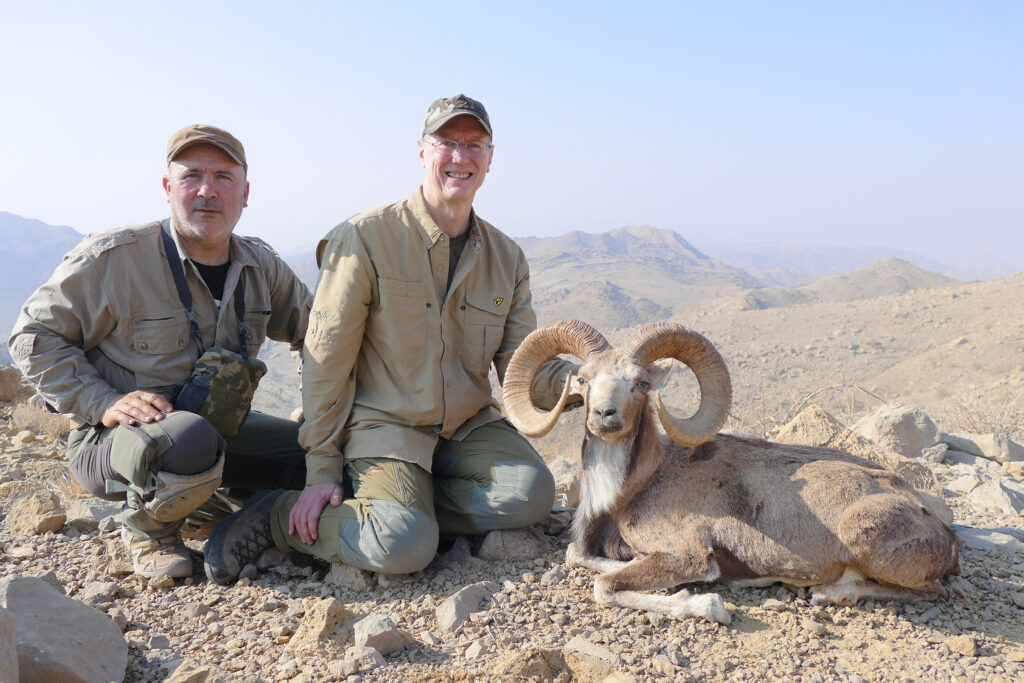
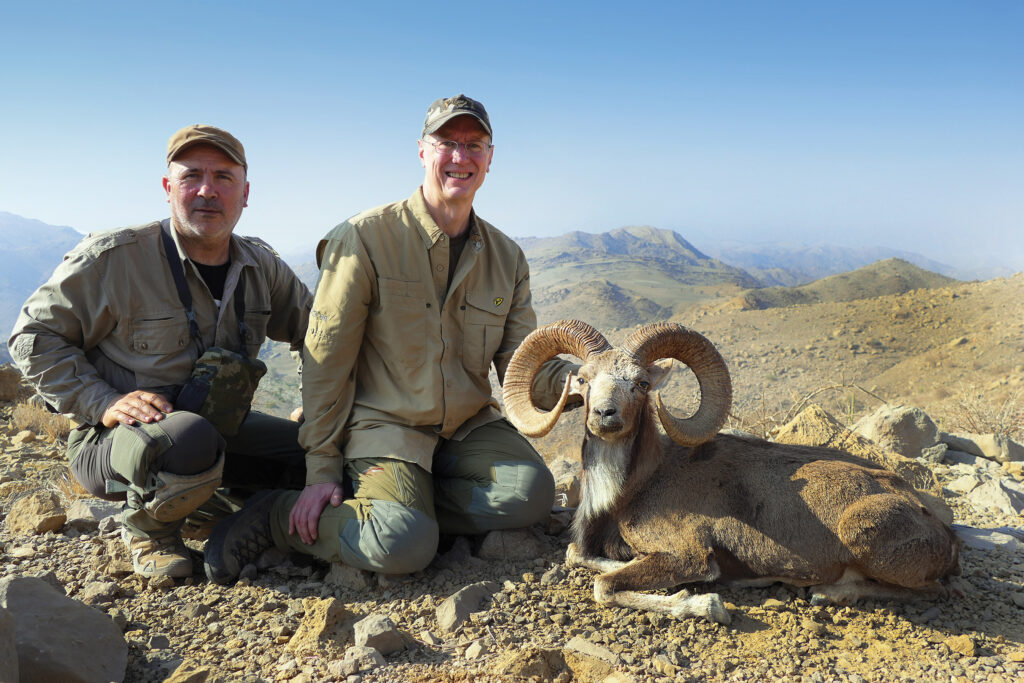
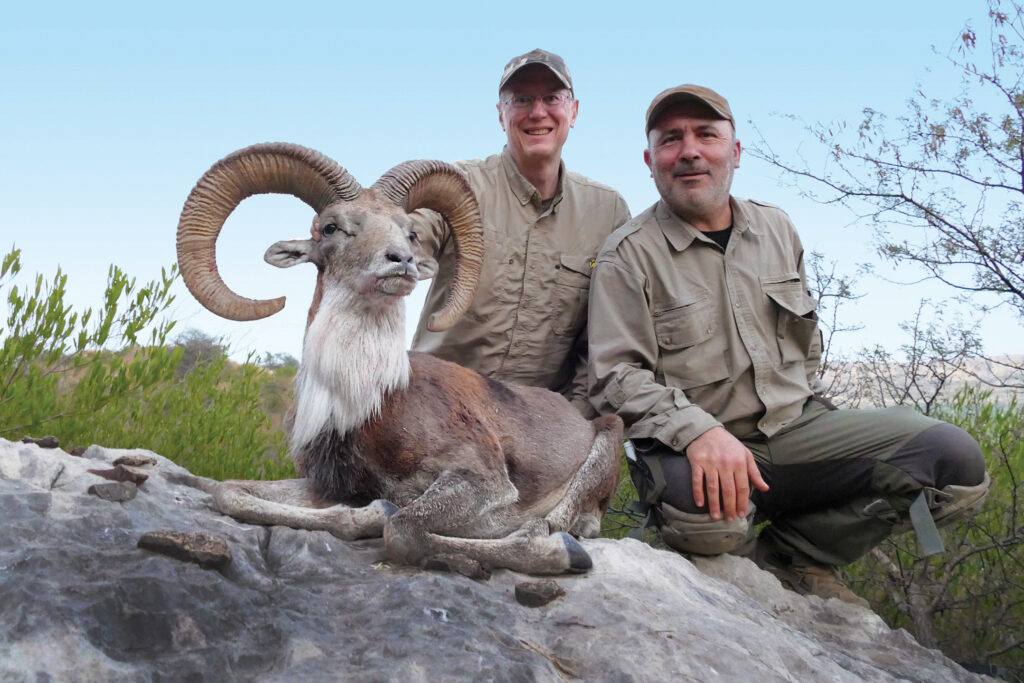
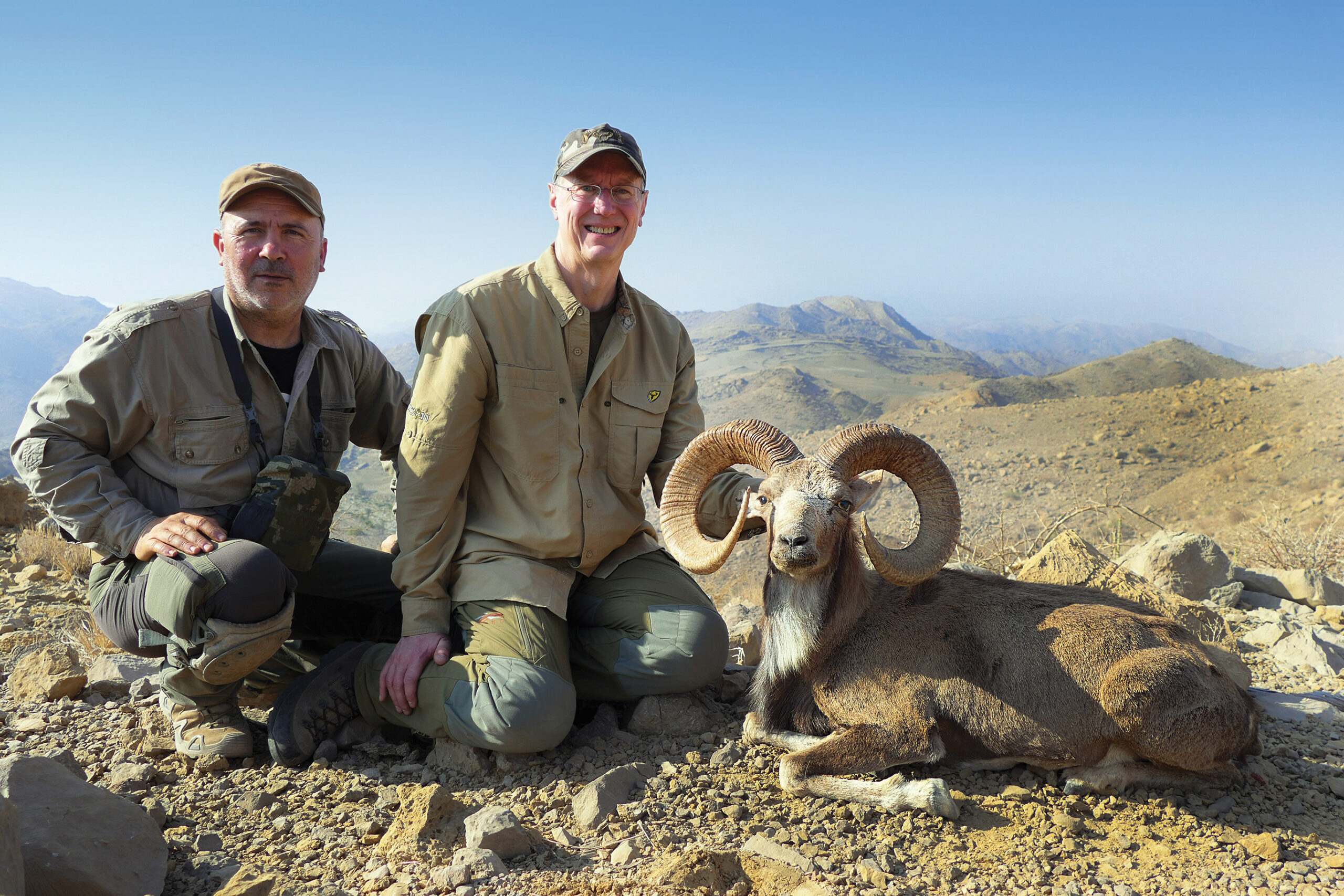
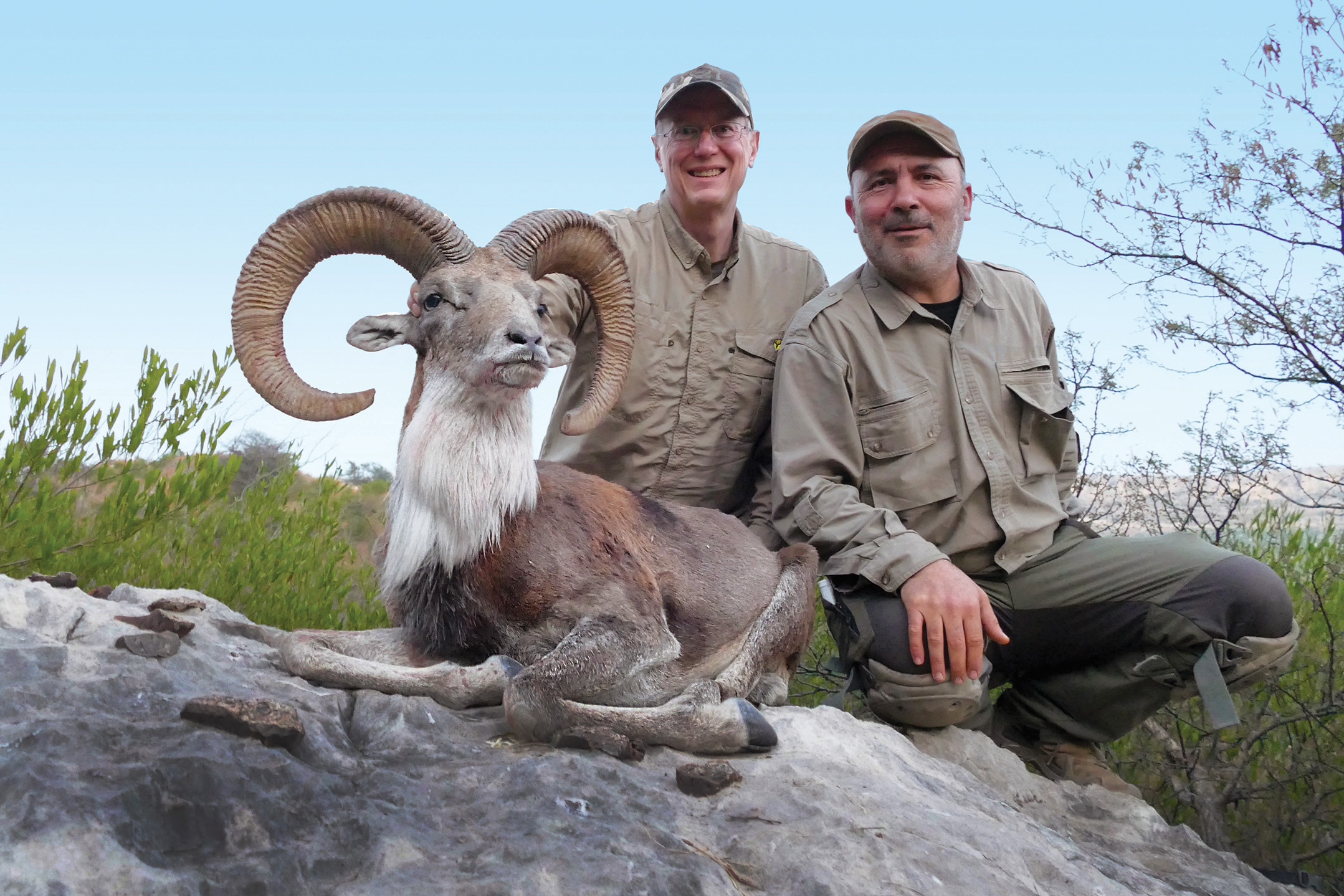
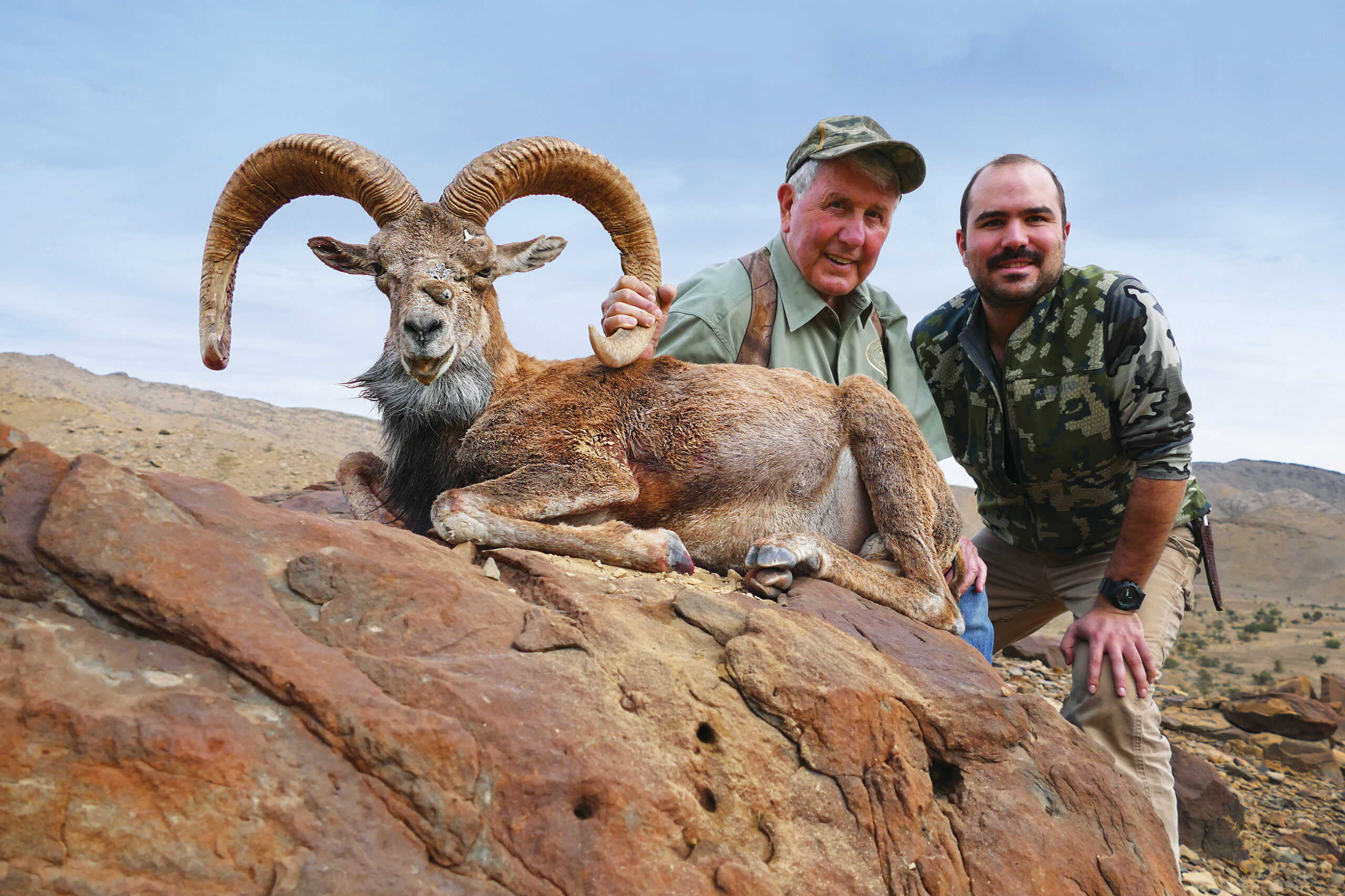
Trophy Profile: One of the largest Urial subspecies, featuring wide, open horn curls and heavier mass than southern Urials.
Average Horn Length: 30”–38”
Season: November – February
Best Time: December – January
Airport / Access: Islamabad International Airport, followed by vehicle transfer to hunting areas
Hunting Style: Spot-and-stalk in foothills and rolling mountain terrain
Comfort / Physical Level: Moderate physical demand; accessible terrain
Afghan Urial
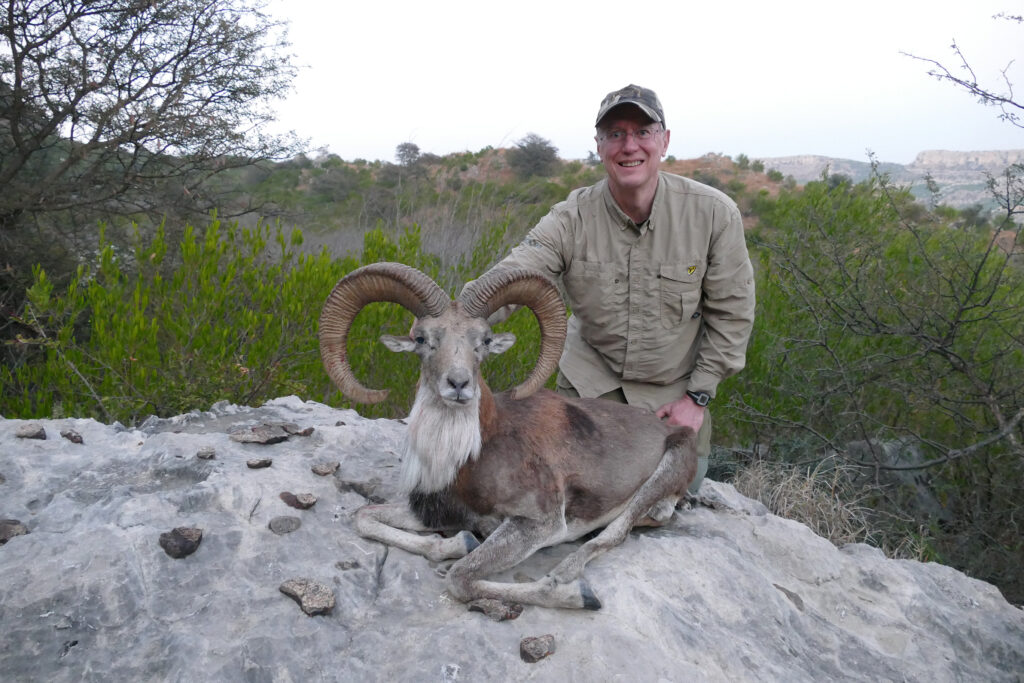
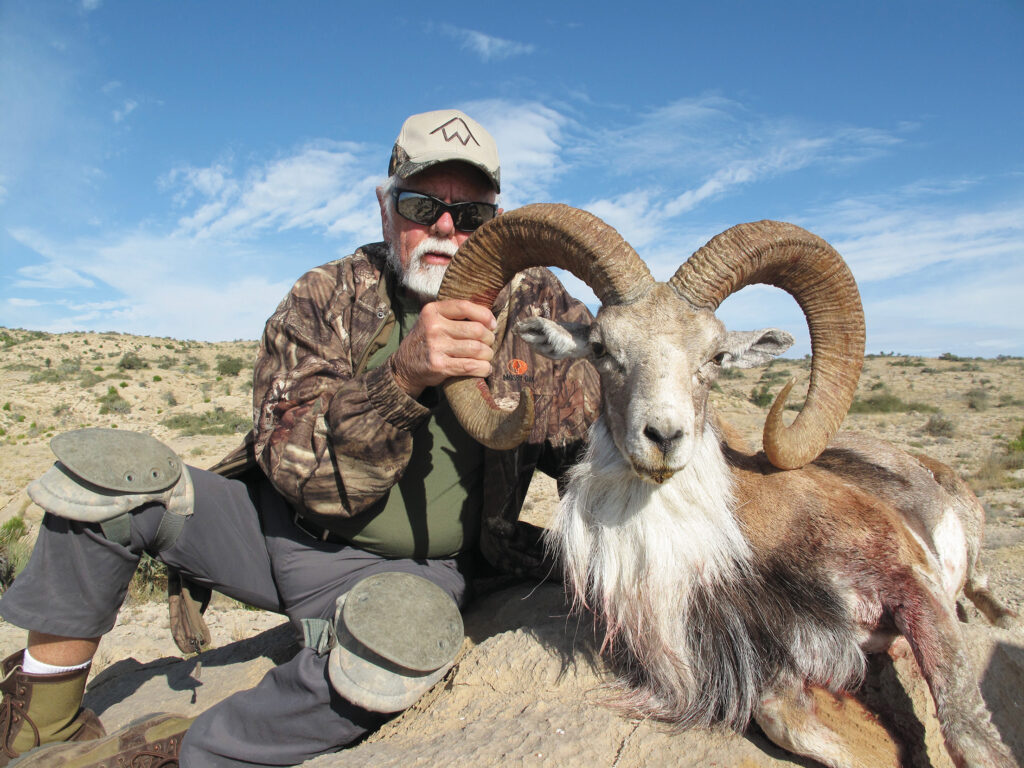
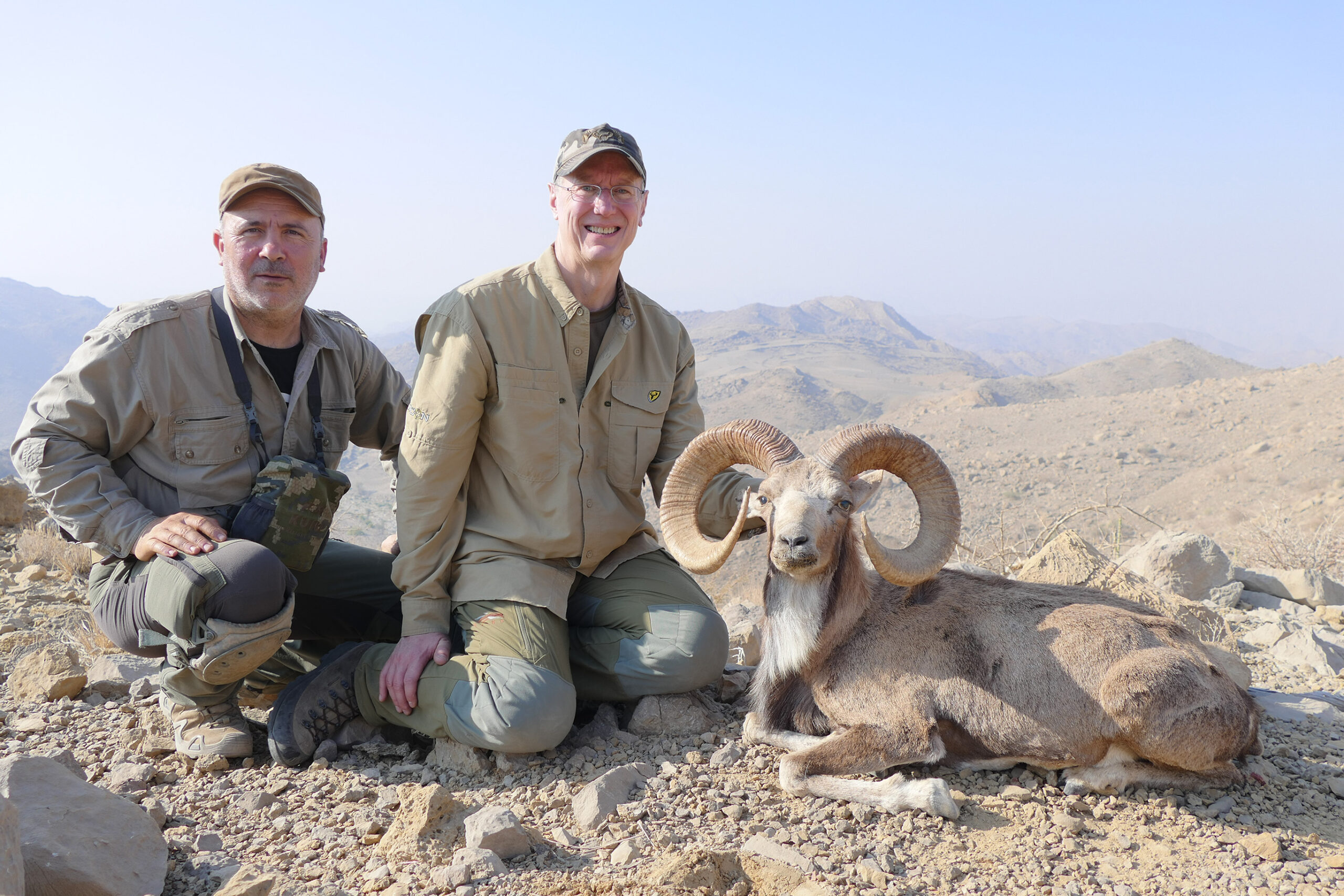
Blanford Urial
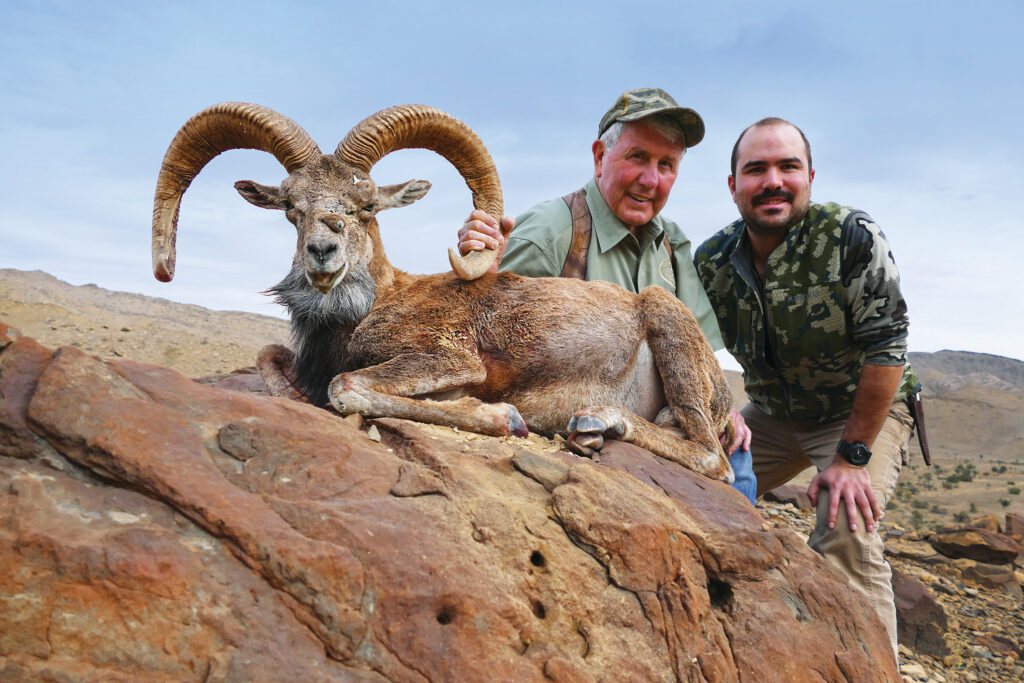
Trophy Profile: The Blanford Urial is one of the most beautiful species of wild sheep in the world. They weigh up to 25–35 kg (50–75 pounds). Rams with horns measuring 65–90 cm (26”–35”).
Season: November – February
Best Time: December – February
Airport / Access: Hunting area is 2–4 hours away from Karachi Airport, with a very nice lodge and great food representing local cuisine.
Hunting Style: Physically, this can be probably one of the easiest mountain game to hunt.
Comfort / Physical Level: One of the easiest hunts physically; lodge-based comfort.
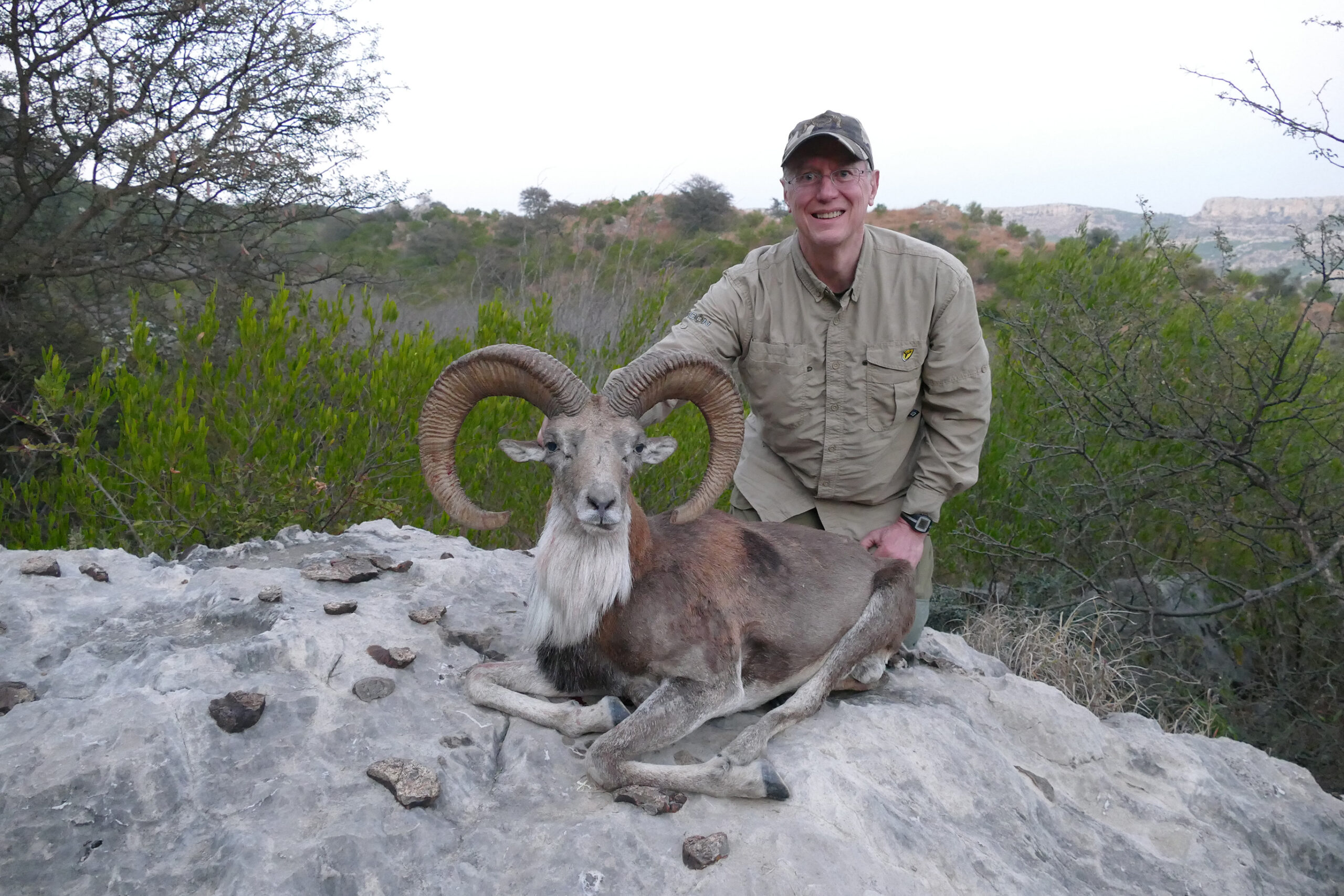
Punjab Urial
Trophy Profile: The rams have horns 25–34 inches and weigh 50–75 pounds.
Season: November – February
Best Time: December – February
Airport / Access: Hunting area is 2–4 hours’ drive from Islamabad.
Hunting Style: Classic foothill and range hunting in scrub forest habitat.
Comfort / Physical Level: Moderate terrain; generally comfortable access.
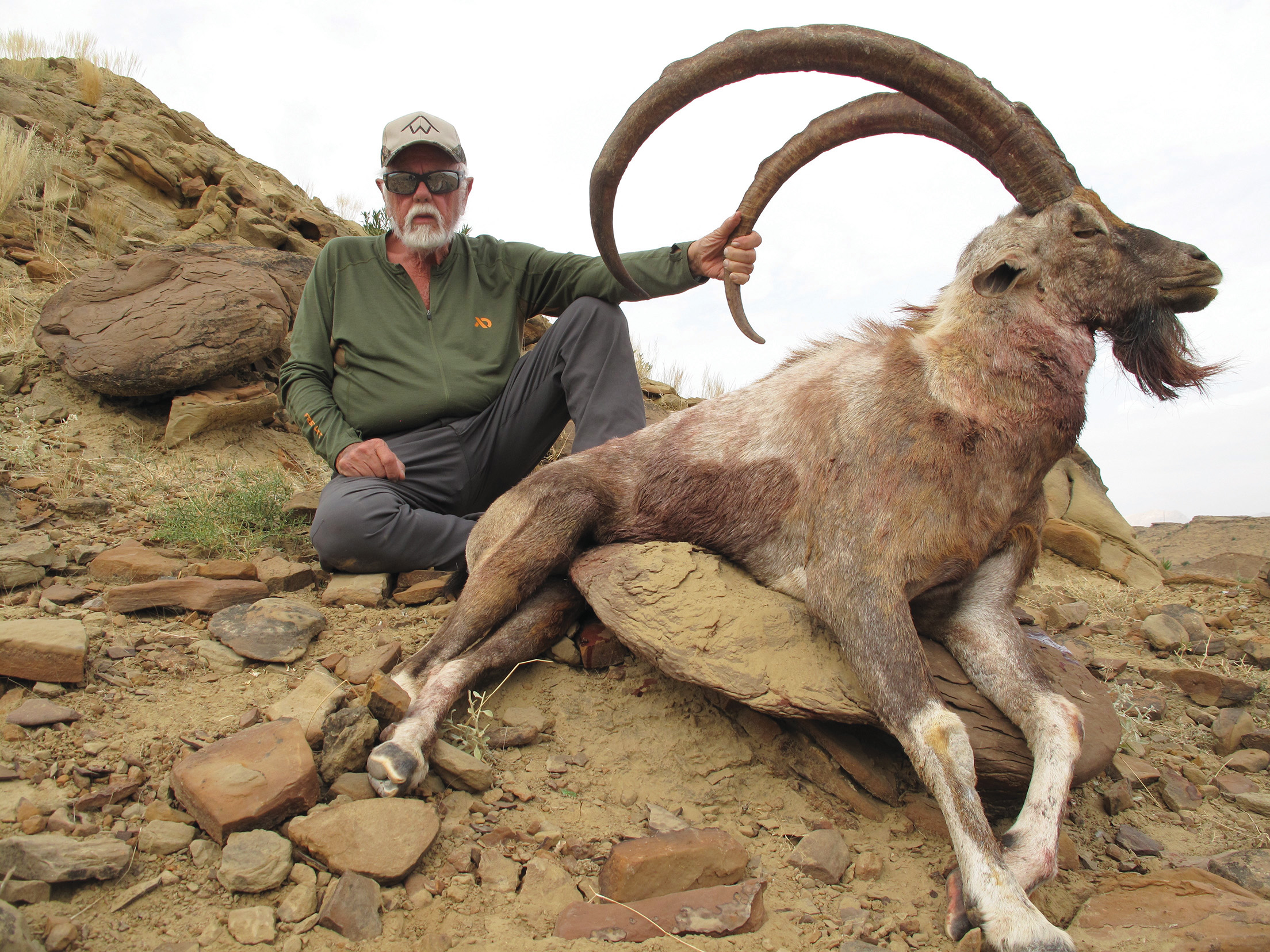
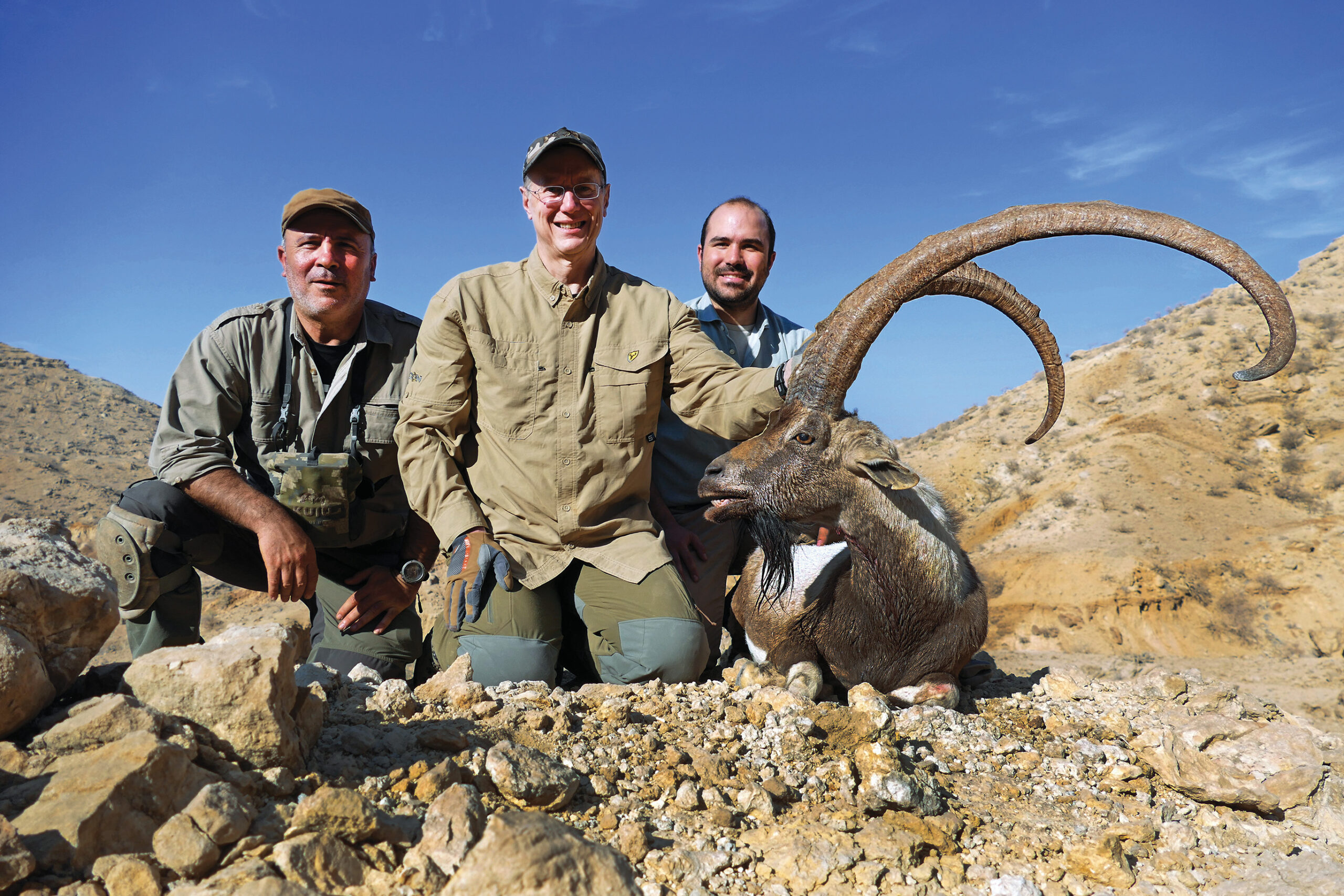
Himalayan Ibex
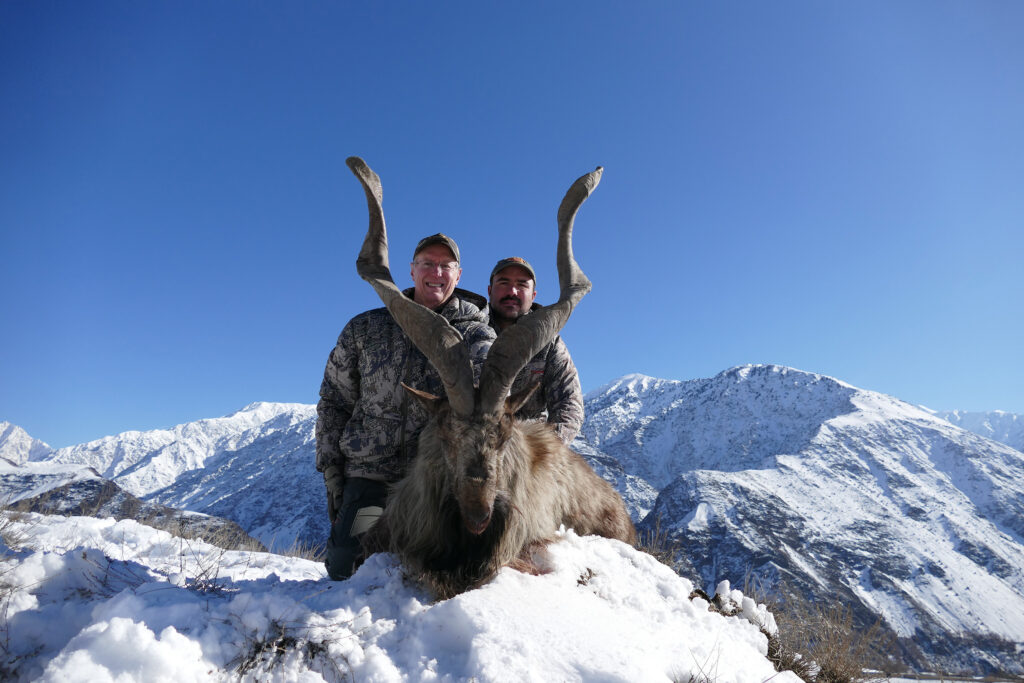
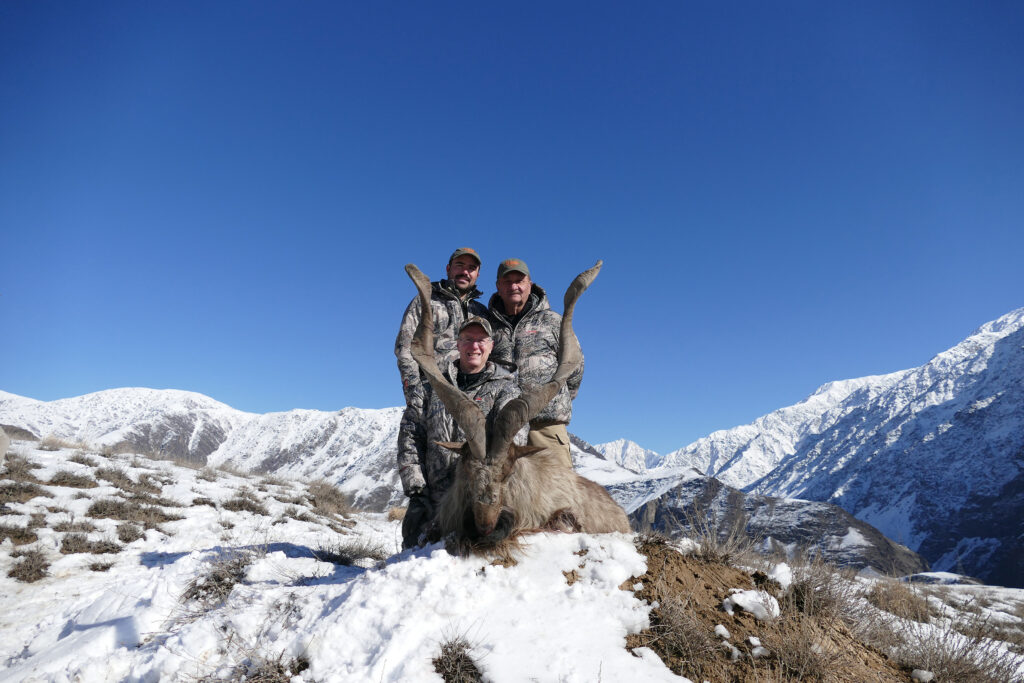
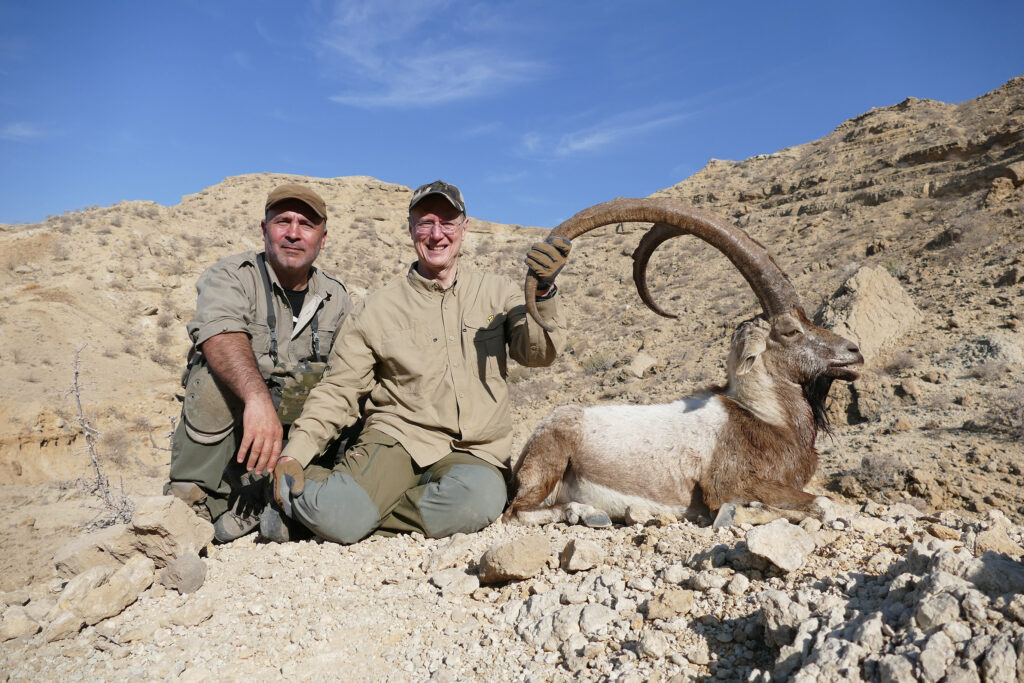
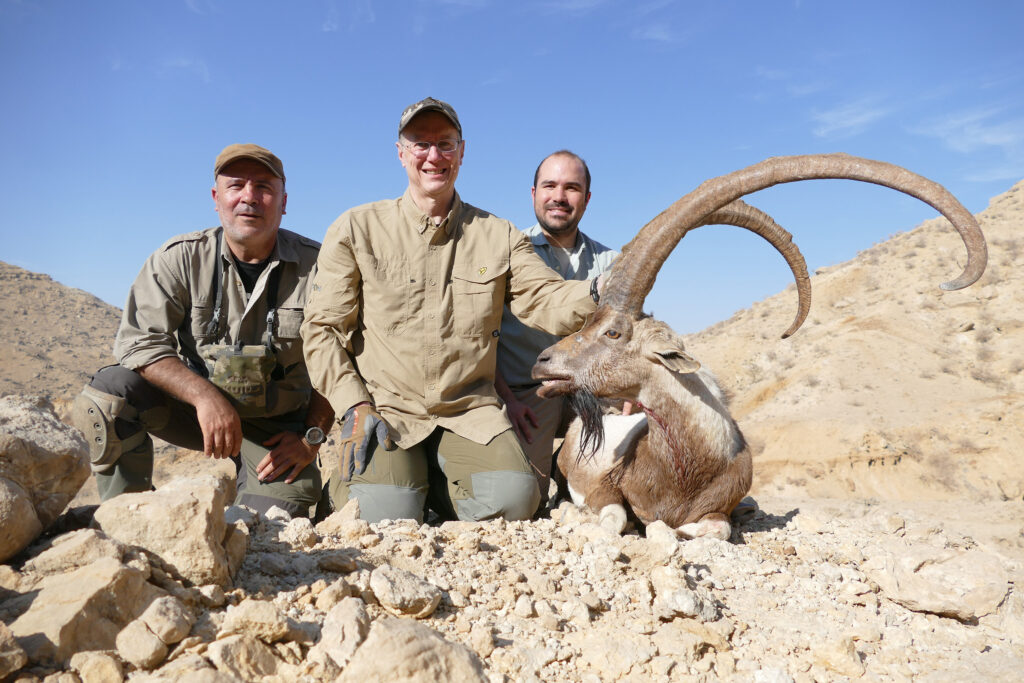
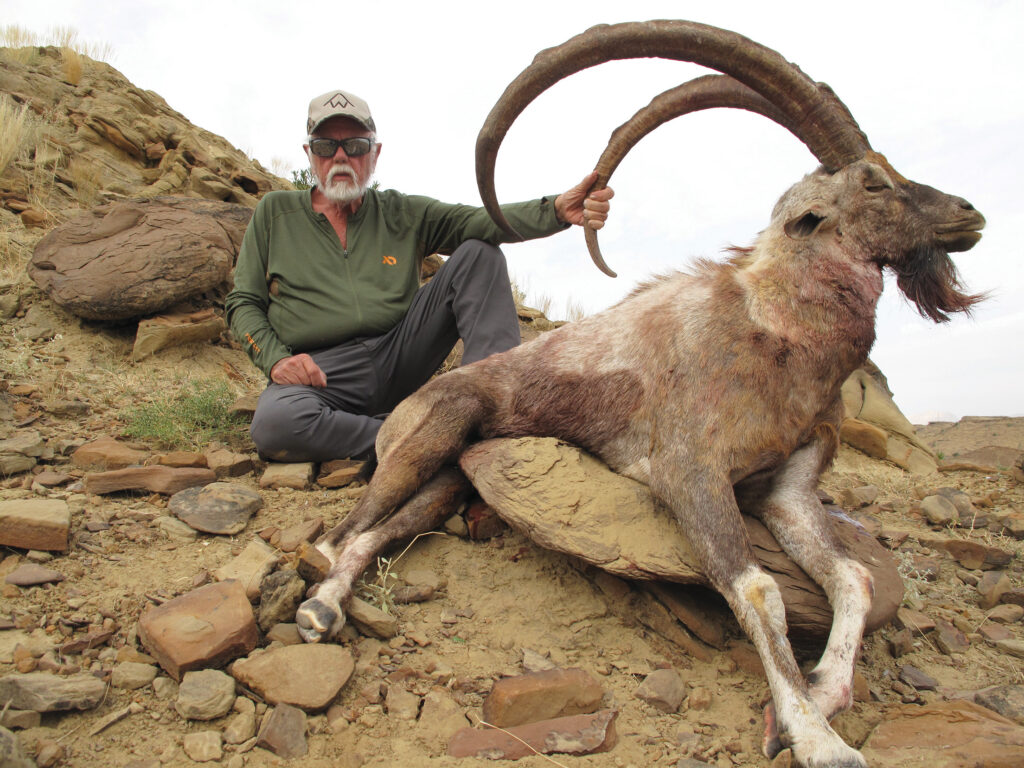
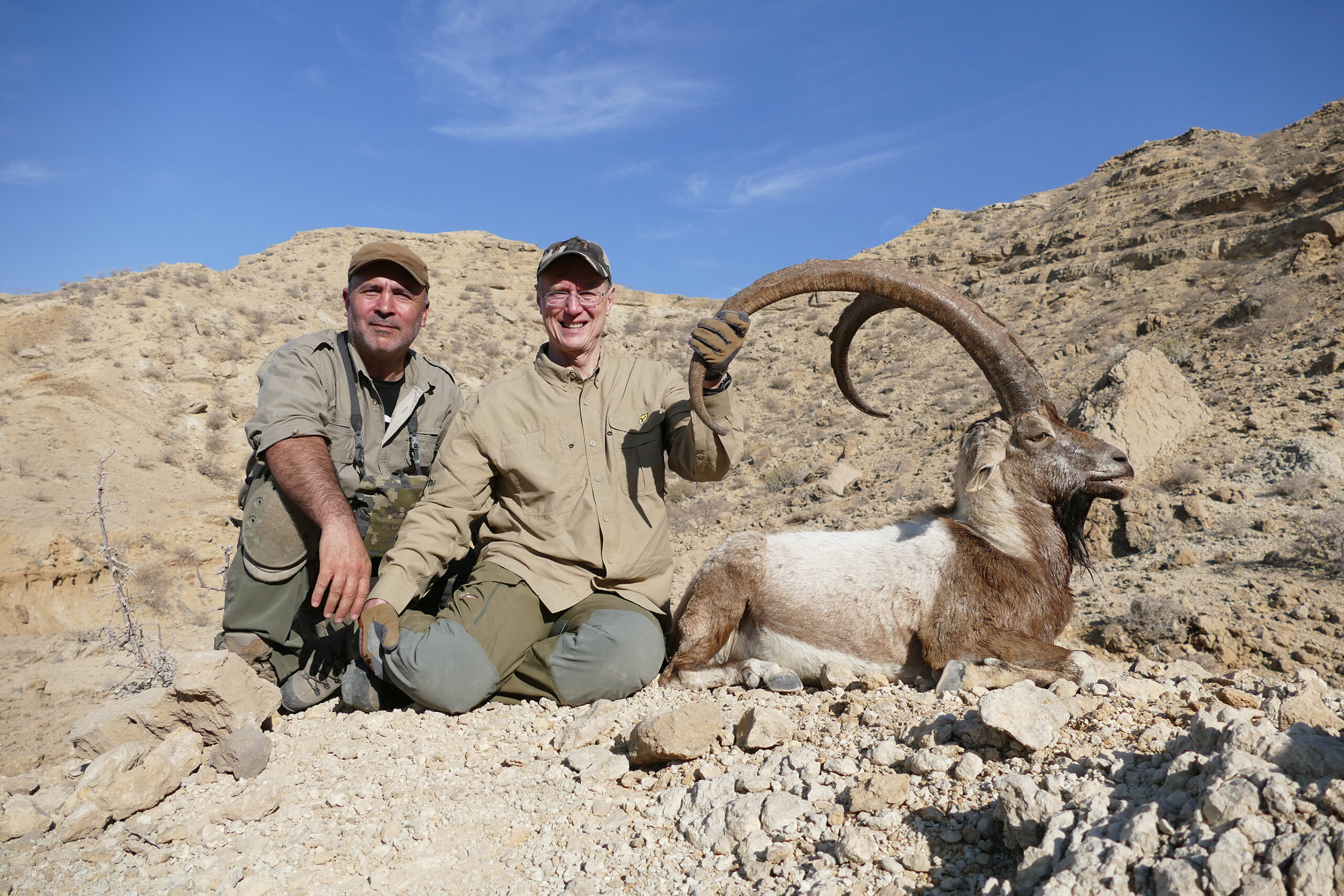
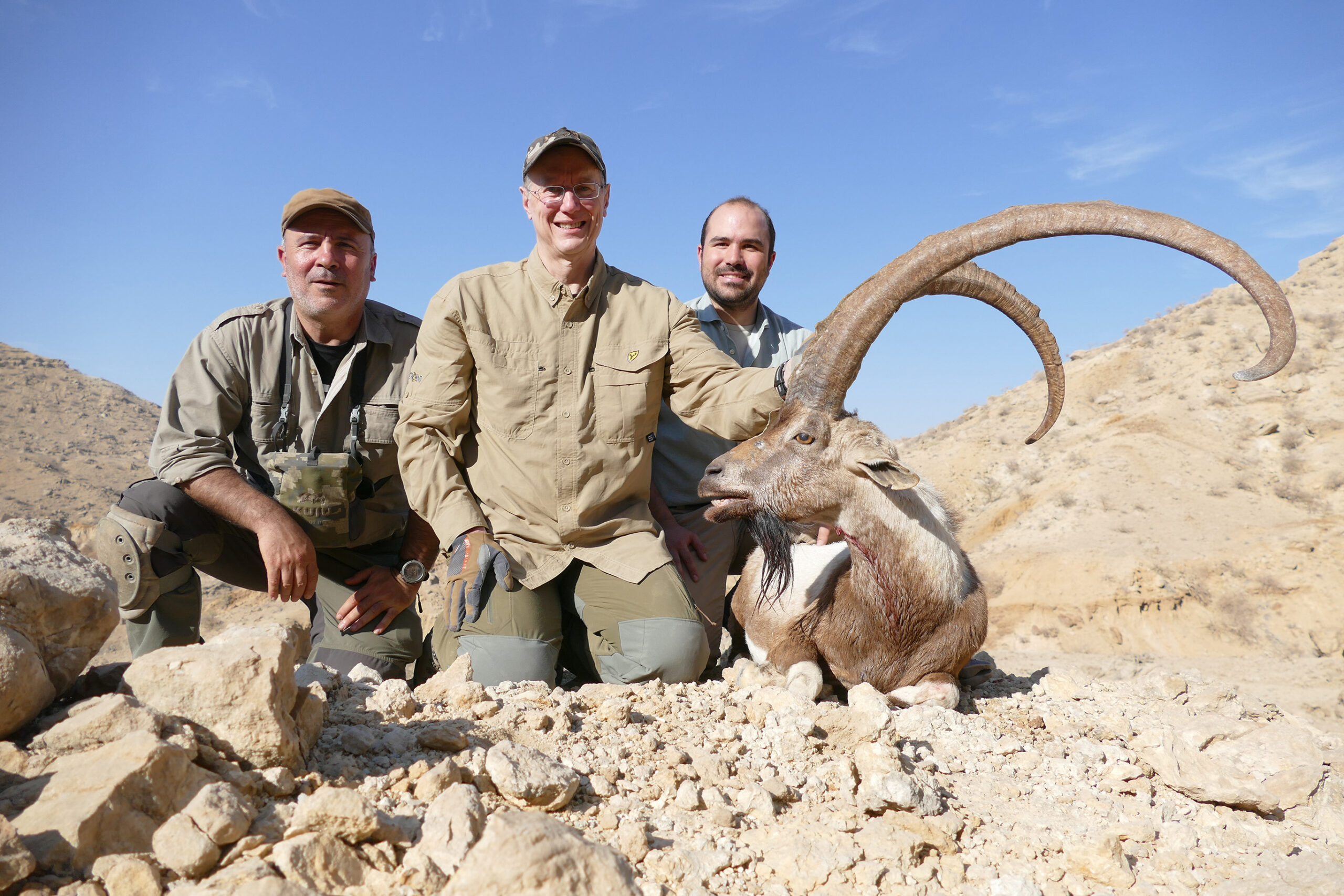
Trophy Profile: This type of Ibex look similar to their cousins in Kyrgyzstan and Tajikistan with a larger and lighter coloured saddle. Body size also similar being up to 250 lbs. Its horns have grown up to 55 inches in a few extraordinary cases in the past; our trophy average over the last years have been over 40 inches.
Season: Mid-November – End of March
Best Time: December 1 – Late February
Airport / Access: Fly Islamabad → Gilgit Airport, within close proximity of our Ibex hunting areas.
Hunting Style: Himalayan Ibex hunting is mostly conducted from very well roads which allows us to reach most parts of our areas, making this hunt most enjoyable for everyone in any physical condition. Of course we can reach very remote areas with the “sheep-shape” hunter in search of a monarch.
Comfort / Physical Level: Suitable for all physical conditions, with optional remote hunting.
Sindh Ibex
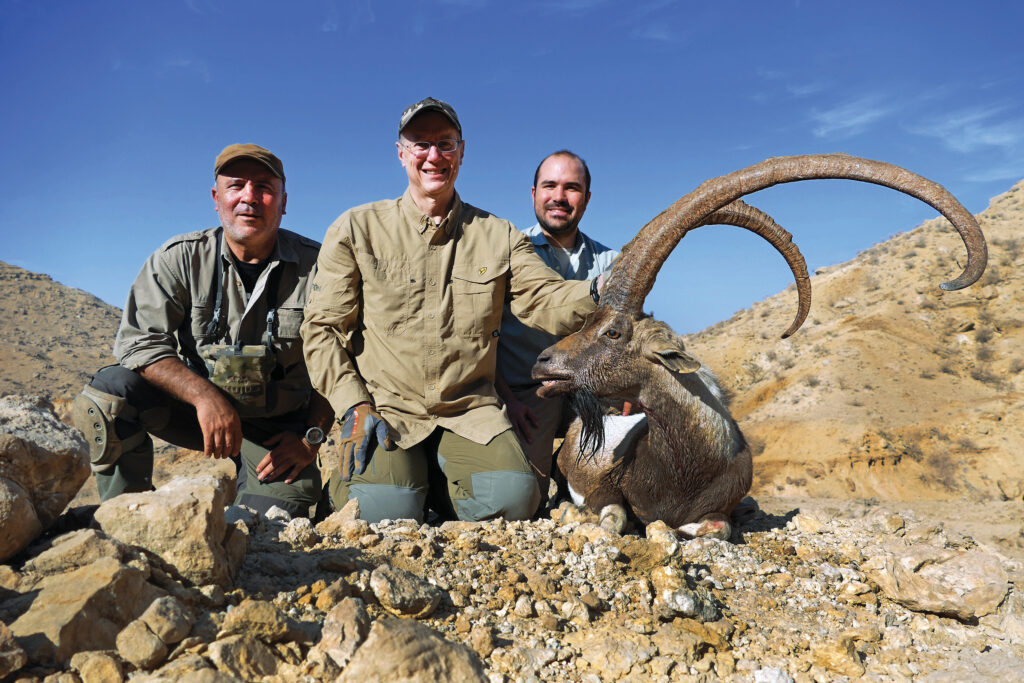
Trophy Profile: This type of Ibex look similar to their cousins in Iran with a smaller body and lighter coloured coat. Its horns have grown up to 55 inches in a few extraordinary cases in the past; our trophy average over the last years have been over 40 inches.
Season: Mid-November – End of March
Best Time: December 1 – Late February
Airport / Access: Fly Islamabad → Karachi Airport, within close proximity of our hunting areas.
Hunting Style: Sindh Ibex hunting is mostly conducted from very well roads which allows us to reach most parts of our areas, making this hunt most enjoyable for everyone in any physical condition. Of course we can reach very remote areas with the “sheep-shape” hunter in search of a monarch.
Comfort / Physical Level: Suitable for all physical conditions, with optional remote hunting.
Suleiman Markhor
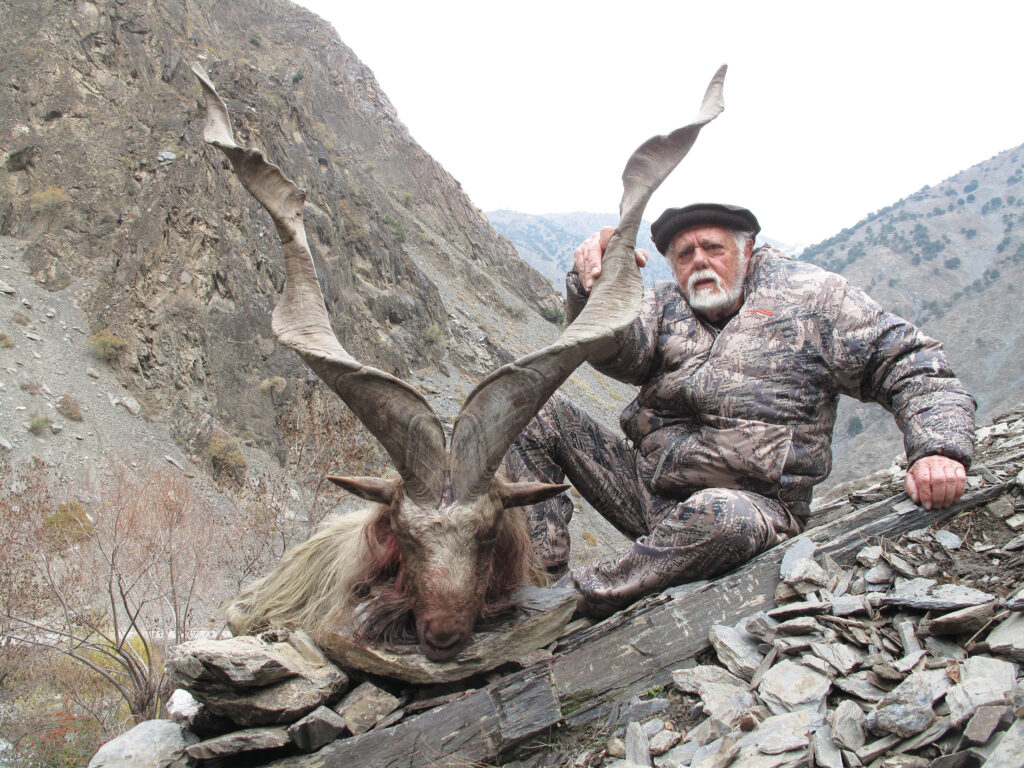
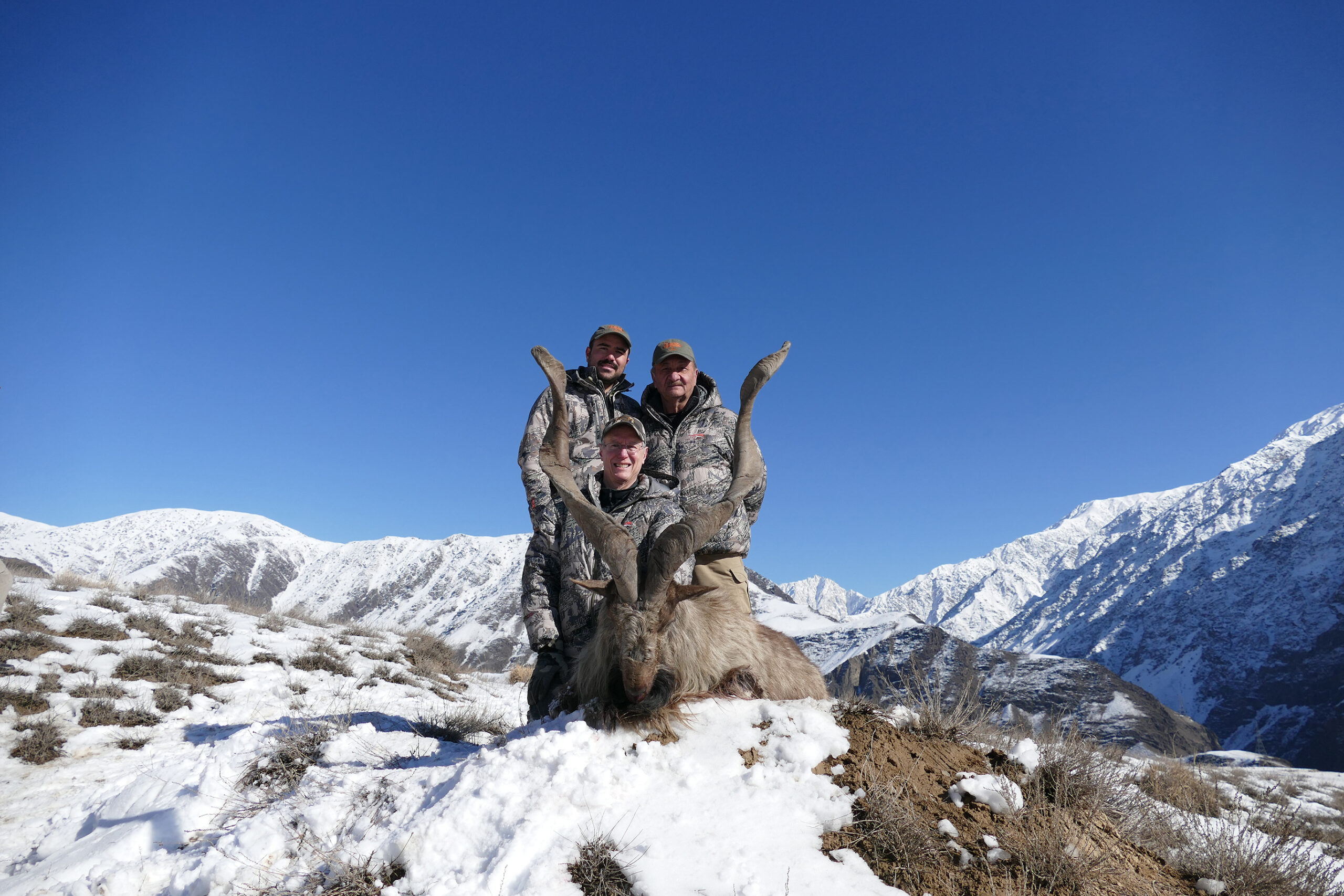
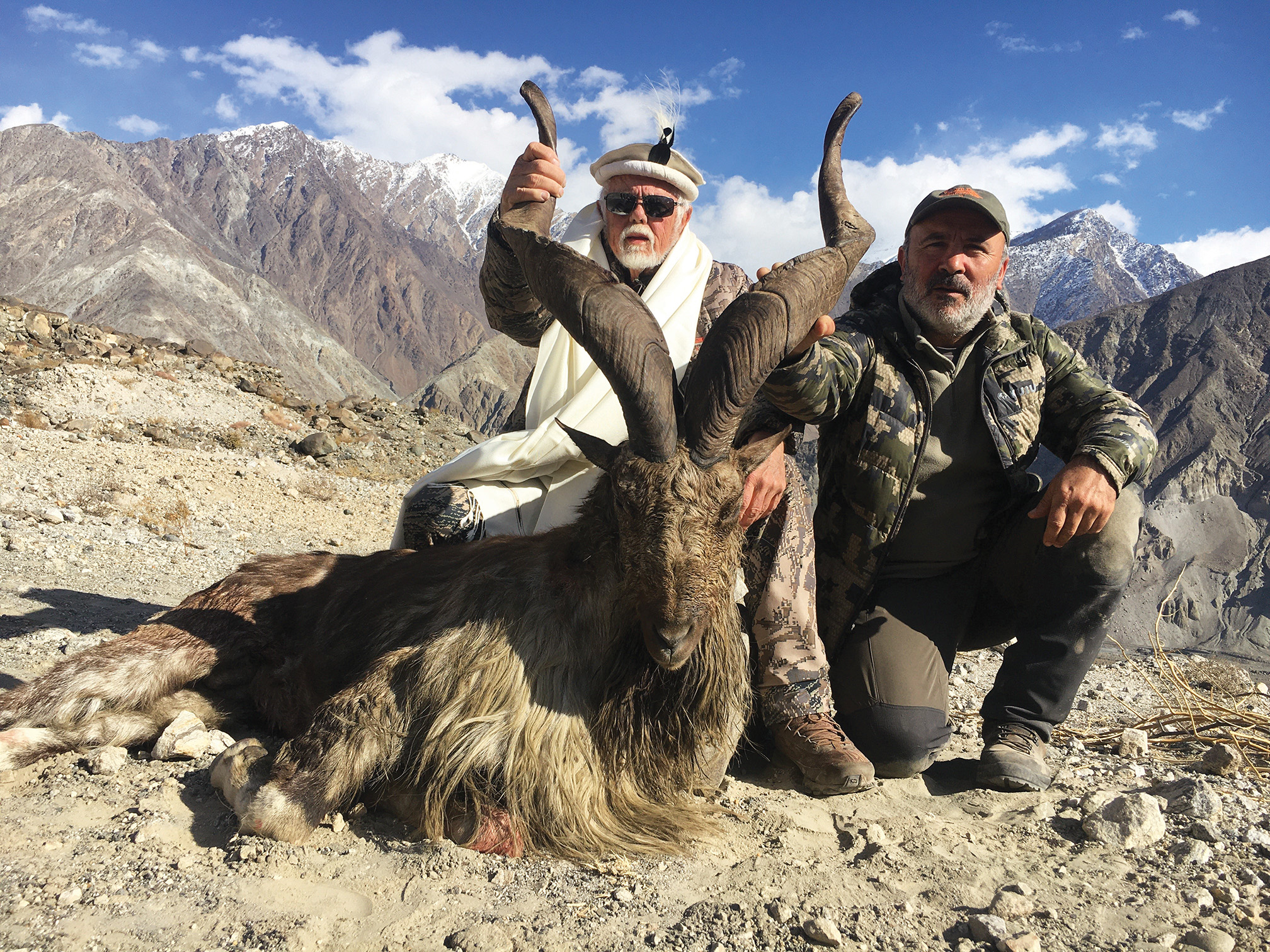
Trophy Profile: The coat is short, coarse and thick in winter, short and smooth in summer. The male’s ruff is much shorter and less conspicuous than in the northern races. The horns are straight, forming two to three complete spiral turns that can have either a tight twist resembling a corkscrew or a more open twist of the Kabul type. This species have shorter horns than their cousins. Typically, the horns of the Suleiman Markhor are straight with very tight curls looking like a corkscrew, sometimes slightly more open curl like the Kabul Markhor, and have 2–3 twists. Body size of the Suleiman is much smaller than its cousins and coat shorter; colour much lighter like sand. Suleiman horns have grown up to 40 inchesin a few extraordinary cases in the past; although their horns are usually 30’’–36’’.
Season: Early December – Late March
Best Time: Early December – Mid-February
Airport / Access: Fly Islamabad → Quetta Airport, then 2–3 hours’ drive to the hunting areas.
Hunting Style: Suleiman Markhor hunting is mostly conducted from roads, which allows us to reach most parts of our areas, making this hunt most enjoyable for everyone in any physical condition.
Comfort / Physical Level: Suitable for all physical conditions
Kashmir Markhor
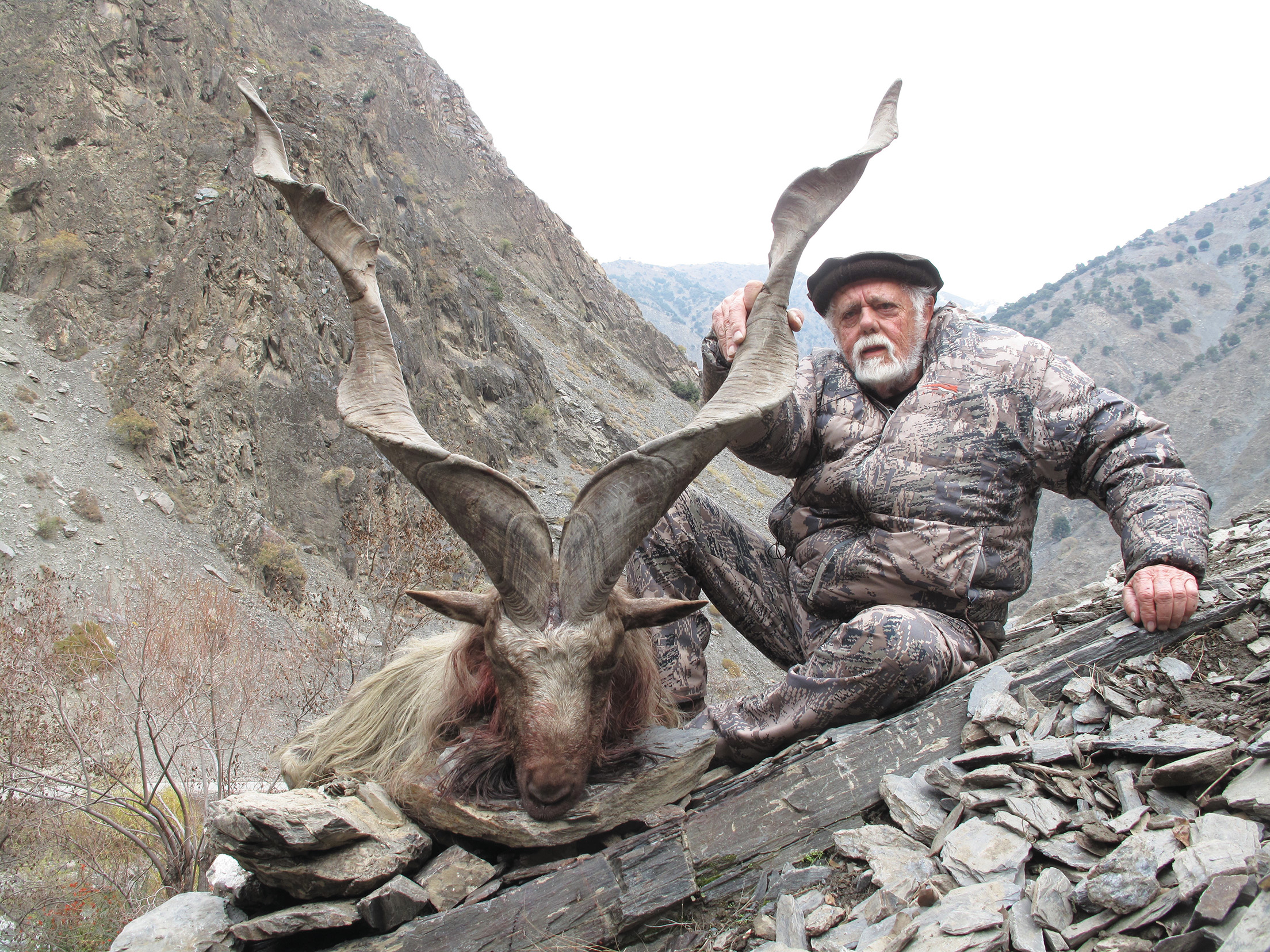
Trophy Profile: Kashmir Markhor have the longest horn relation to body size among all Markhor species around the world. Kashmir Markhor horns have slight to moderate flare with 3–4 spiral, kudu-like twists; however, straighter horns of the Kabul type have occurred in the Chitral District. Its horns have grown up to 65 inches in a few extraordinary cases in the past although their horns are usually 40’’–48’’. A mature Kashmir Markhor weighs between 175–230 lbs.
Season: Late November – End of March
Best Time: Early December – Mid-February
Airport / Access: Fly Islamabad → Chitral Airport, then 1–3 hours’ drive to the hunting areas.
Hunting Style: Kashmir Markhor hunting is mostly conducted from roads, which allows us to reach most parts of our areas, making this hunt most enjoyable for everyone in any physical condition. Of course, we can hunt more remote areas with the “sheep-shape” hunter in search of a monarch.
Comfort / Physical Level: Suitable for all physical conditions, with optional remote mountain hunting.
Astor Markhor
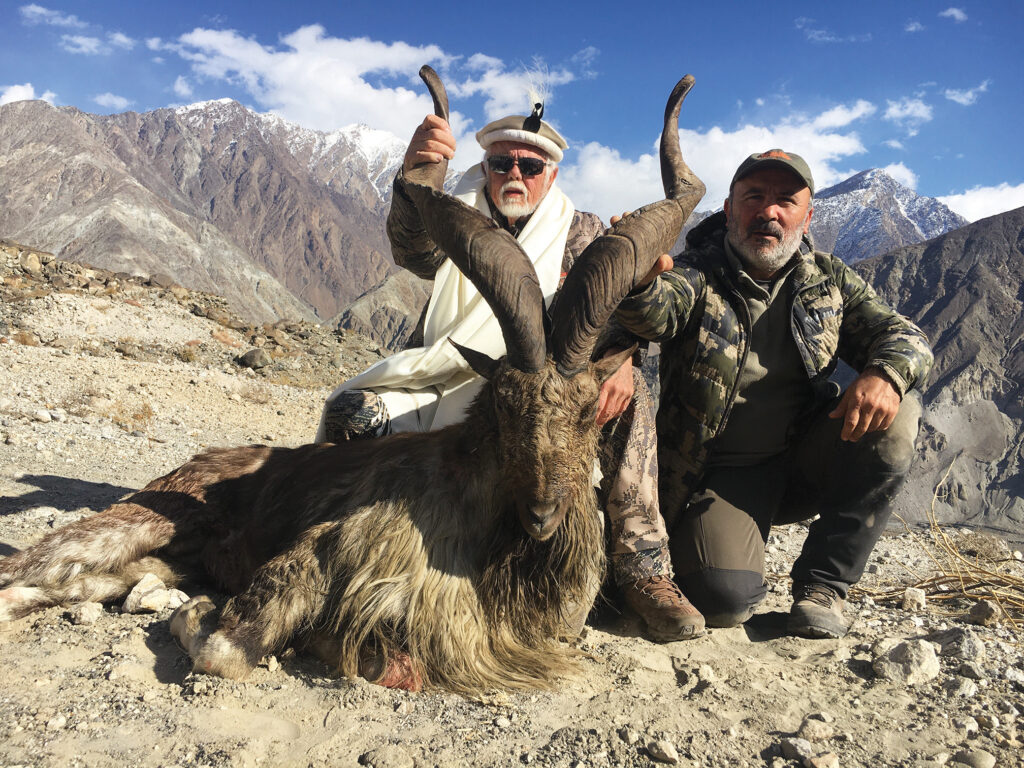
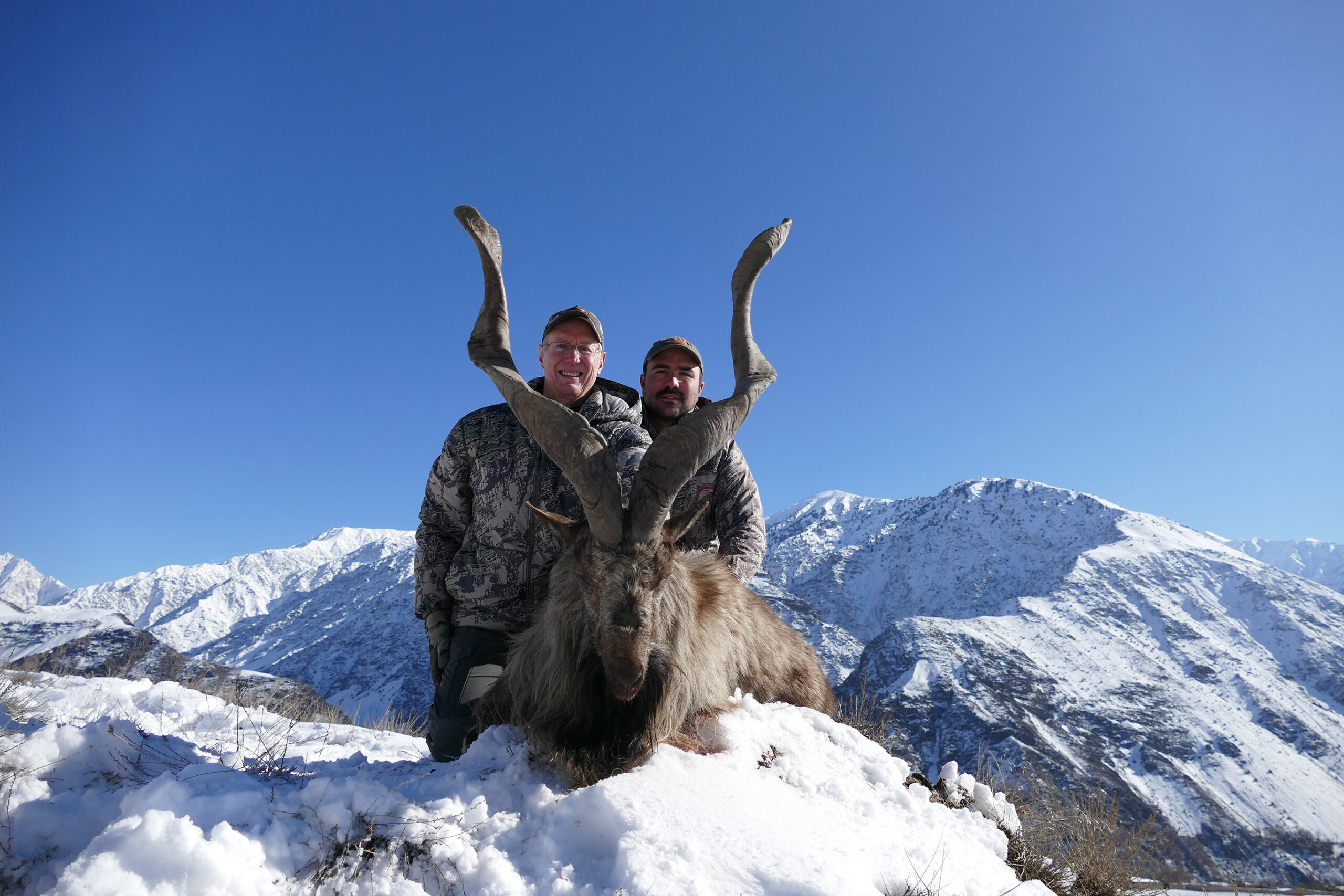
Trophy Profile: This species don’t have horns as long as their Kashmir cousin. Typically, the horns of the Astor Markhor flare very widely just above the base and have 1–2 twists. Body size of the Astor is similar to Kashmir; however the colour of their coat is usually lighter. Their horns have grown up to 60 inches in a few extraordinary cases in the past; although their horns are usually 36’’–44’’.
Season: Early December – Late March
Best Time: Early December – Mid-February
Airport / Access: Fly Islamabad → Gilgit Airport (approx. 45 minutes), then 0.5–2 hours’ drive to the hunting areas.
Hunting Style: Astor Markhor hunting is mostly conducted from roads, which allows us to reach most parts of our areas, making this hunt most enjoyable for everyone in any physical condition. Of course, we can hunt more remote areas with the “sheep-shape” hunter in search of a monarch.
Comfort / Physical Level: Suitable for all physical conditions, with optional remote mountain hunting.
Chinkara
Trophy Profile: An adult weighs in at about 23 kilograms (50 pounds); horns are 7–12 inches.
Season: November – February
Best Time: December – February
Airport / Access: Shares lower habitat of Blanford Urial. Hunting area is 2–4 hours from Karachi.
Hunting Style: Desert and lowland stalking.
Comfort / Physical Level: Generally accessible terrain.